Start here
Is the Rome show worth it?
A plain answer on the Welcome to Rome multimedia show: what the film and models show, how long it takes, who it suits and when to see it.
Book the history show ↗Quick answer
Yes, if you want a quick, clear outline of Rome's history before you start walking the ruins, and you accept that it is a short film and four models, not a museum. The booking gives 27 minutes of projections on the walls and ceiling, with a lit model of the city on the floor, inside a former cinema. See it early in your trip, then spend your time on the real sites.
The short answer
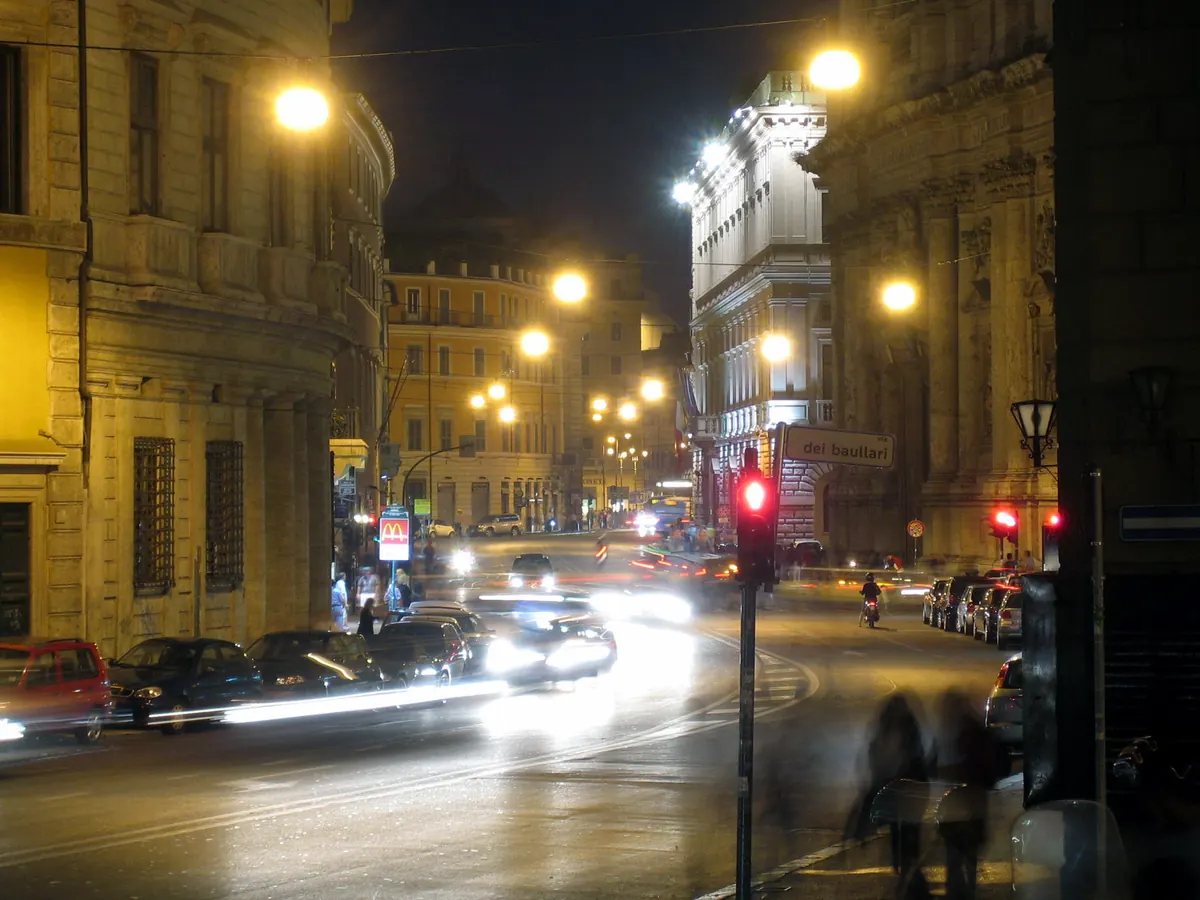
Worth it when you want the shape of Rome's history in your head before you meet the ruins, and when you have an indoor half hour to spare. Not worth it if you want a museum of ancient objects, or if you have a single free hour in Rome and must choose between this and a monument. The show is a film of about half an hour in the former Cinema Augustus, on Corso Vittorio Emanuele II, followed by interactive models that you can try at your own pace. Book it on day one, then go and stand in the places it describes. It also fits easily around a day, because there is no group to wait for.
- Book it on day one for a clear outline of the city
- Skip it if you only have an hour and a monument to see
- Pair it with a guided tour of the real sites
What the show is
A multimedia show built inside a former cinema. The booking describes a multi-projection in which walls and ceilings come alive while a large model of the city lights up on the floor to show how Rome grew over the centuries. The show runs continuously, so you start at any point in opening hours, and an audio guide comes in nine languages. The booking also lists four large interactive models, which you can try after the film. Rome's tourism website describes spectacular video projections on the walls, ceiling and floor with a narrator, plus holograms and interactive exhibits. Nothing in the booking suggests live performers or a seated theatre programme: this is a room you walk into and a film that is already running.
- A projection on the walls and ceiling
- A lit floor model of the city
- Four interactive models
- An audio guide in nine languages
How long it takes
The booking gives 27 minutes for the projection and describes it as 2,700 years of history in 27 minutes. Rome's tourism website says the main projection lasts 30 minutes, so call it about half an hour. The models come afterwards and take as long as you like to try; the booking says you can explore at your own pace, so a quick look and a long play are both fine. Two reviewers on the booking page wished the show were longer, and one said the format of short visuals before the film worked well. It is a short, dense film, and it is not a good choice as the main event of an evening out.
The four models
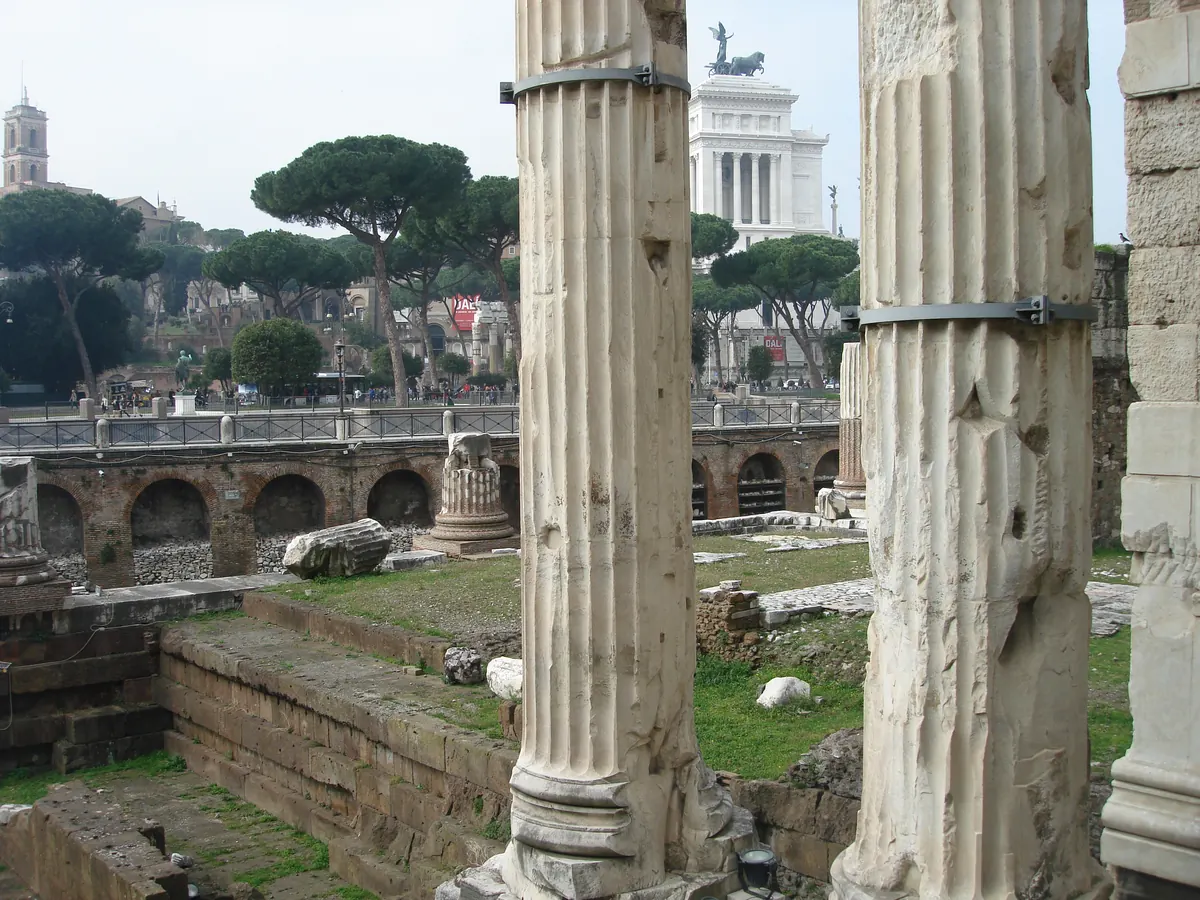
The booking lists four large interactive models: the Imperial Forum, the Forum of Augustus, the Mausoleum of Hadrian and St Peter's Basilica. Wikipedia says Hadrian commissioned the mausoleum as his family's burial place, and that it later became the papal fortress called Castel Sant'Angelo. The Forum of Augustus was inaugurated in 2 BC and holds the Temple of Mars Ultor. A 2017 news report on the show's opening mentions moving models, maps and holograms. They give you a plan view of places you will later meet as ruins or crowds. Rome's tourism website names the same landmarks, with the Imperial Fora and the Forum of Augustus among them.
Read next: Rome's history in seven ages
The ages the film passes through
A story of about 2,700 years has to be told in ages, and the news report says the floor model follows the city from the seven kings through the Republic and the Empire to the papal era. The booking describes the film as telling the ages that built the identity of the eternal city. This site does not say which scenes appear, but the stretch is clear: a founding legend traditionally dated to 753 BC, the Republic from 509 BC, the Empire from 27 BC, the popes, the Renaissance and the capital of 1871. A separate guide sets out those ages with sources.
Why see it first
Rome's history is long, and the ruins make little sense without an order. The film lays out the order, from the legendary founding to the modern capital, so that a column in the Forum or an arena wall has a place in the story. Visitors who book it at the start of a trip describe it as setting the scene, and one reviewer who took an eight-year-old at the start of a stay called it very well done. The same film is less useful on your last day, when you have already walked the ruins and met the story on the ground. On a short trip, half an hour on day one changes how you read everything after it.
What visitors say
Reviews on the booking page are strongly positive: it carries 4.5 out of 5 from more than 3,600 reviews, and value for money scores slightly lower. Reviewers praise the film above the models, and several say it explained the city's history in a form that was easy to follow. The common complaint is length: more than one wishes it ran longer or that there were more displays. One reviewer who arrived late said the staff dealt with it without any issue. Read the pattern as a good primer that leaves people wanting more. The recent reviews come from visitors from the United States, the United Kingdom, France, Poland and Austria, all marked as verified bookings.
What it cannot do, and what it isn't
It cannot show you scale. Wikipedia estimates that the Colosseum held between 50,000 and 80,000 spectators, and you only feel that standing inside it. It cannot let you wander through the Forum, which Wikipedia calls the centre of ancient Rome, and it cannot answer a question the way a live guide can. It is not a collection of ancient objects, because the booking describes projections and interactive models, not finds. And it is not a full history of the city: the 2017 news report calls it a summary of the key stages, aimed at visitors and residents alike.
The street and the building
The show stands on Corso Vittorio Emanuele II, a long street that runs from Piazza del Gesù to Piazza Pasquale Paoli, at the start of the Ponte Vittorio Emanuele II. Italian Wikipedia says the corso was designed to link the old centre with new districts across the Tiber, and that it cut through old neighbourhoods. The same news report says the former Cinema Augustus had been closed and abandoned for years before its restoration, which it puts at about 900,000 euros, paid for by private citizens. Use the number, 203, to find the door.
Booking and access
The booking page shows free cancellation until the day before, and you can hold a place now and settle up later. It marks the show as wheelchair accessible and says the projection and interactive exhibits can be used by anyone with a disability. The booking also says the last show starts an hour before closing. Check the calendar for the date and any arrival time on your confirmation, and look at opening hours before you plan the rest of the day around it. The booking page sets no minimum age. Because the show starts at any time in opening hours, it is also a safe plan B for a rainy afternoon, as long as you book for the right date.
Who this isn't for
Pass if you want an hour among real ancient objects, if your Rome trip is a single afternoon, or if you prefer to read a place from a guidebook before you go. It also suits travellers who enjoy a story less than it suits ones who like to see a plan. If you want a live human voice, book a guided tour of the ruins instead. If you want both, see the show first and the guided tour second, ideally on different days, so that the film has time to settle.
Frequently asked questions
Is the Welcome to Rome show worth it?
Yes, as a primer early in a trip. About half an hour of projections plus four models give you the outline of Rome's history. Skip it if you want ancient objects or have only an hour in the city.
How long is the show?
The booking says 27 minutes; Rome's tourism site says 30. Interactive models follow, at your own pace. Allow a little more than the film.
Do I need a start time?
The booking says the show runs continuously, so you can start at any time in opening hours. The last show starts an hour before closing. Your confirmation shows anything particular to your date.
Is it good for children?
It can be, for children who like stories. The booking page states no minimum age, and a reviewer took an eight-year-old at the start of a stay. The models are interactive.
Which audio languages are there?
The booking lists Italian, English, Spanish, French, German, Russian, Chinese, Croatian and Japanese. Rome's tourism site lists eight languages. Choose yours when you enter.
Can I cancel?
Yes, tickets booked through GetYourGuide cancel free until the day before, and you can hold a place now and pay later. Your date shows its own terms.
Sources